I mentioned a while ago that I was "interested" in reading a book called "מלכים ג" by Yochi Brandes; now I'm actually reading it. As I suspected, it's a very interesting story, and is written in a very interesting perspective that, so far, has made me think differently about such concepts as "שבטיות", "גירות" and the woman's place in love in the Tanach.
"שבטִיוּת": By that I mean the tribal divisions that had a major place in our nation even during the Unification Period of the First Commonwealth until it's end. The author understands every event in the Tanach in terms of the tribal differences. The protagonist of the story comes from the land of Ephraim (Samaria) and was raised in a very Ephraim-oriented viewpoint. They're upset the Temple was built in Jerusalem (in the portion of Judah) and that their Temple in Shiloh was destroyed (an event that's spoken of in the 78th psalm. Which, as I recently found out, is actually the source for such famous verses as "וְהוּא רַחוּם" that we say every night and "יְשַׁלַּח בָּם חֲרוֹן אַפּוֹ" that we say at the seder). They see the Judeans as conquerors who want all the tribes to subdue themselves to them. They also don't like Judah because, as sons of Joseph, they prefer the Rachel tribes (Joseph and Benjamin, or Ephraim, Menashe and Benjamin) over the sons of Leah (including Judah) and especially over the sons of Bilhah and Zilpah. According to the author, the tribe of Ephraim feels that many of the episodes that we view as history were actually fabrications of the Judahites to engender spite towars the Rachel tribes. For example the famous story of the "Pilegesh B'Giv'ah" in the end of the book of Shoftim was not totally honest, but was made to make the Benjaminites out to look worse then they were, and to make their capital, Giv'ah, look worse than it was. Especially considering that right after the book of Shoftim, in the beginning of the book of Shmuel, we find Saul coming from Giv'ah and it becoming the capital of the first Israelite monarchy.
As far as the traditional viewpoint goes; it is correct to some extent (I mean, most of it is pretty spelled-out in that psalm I quoted) but some of it is a bit heretical, for example suggesting that some of the events related in Shoftim and Shmuel are either untrue or very one-sided.
"גירות": This word might be translated as "conversion", but I'm using the word in the biblical sense, and it's the biblical understanding of the word and it's meaning that I always find a bit elusive. Even from the beginning I did have a greater understanding of it's biblical context than just "conversion". I knew that it had more of a Talmudic "גר תושב" connotation, which means that it's not usually speaking of someone who accepts only the G-d of Israel and follows His Laws, but any foreigner who is residing in the land and accepts the basic premise of Israelite beliefs and respects the Israelite people (though there are of course full-fledged conversions in the Tanach, such as that of Ruth the Moabite). One, therefore, supposes that there is not much similarity between the ancient Ger and the modern Ger, since the first is geographical and cultural and the second is religious, but the story made me start thinking the stronger connection modern Gerim have with the biblical "stranger"; for besides for the religious changes, the modern Ger also has to become a stranger in a strange land, adopt new cultural customs, and hope to be accepted by her new neighbors.
"אהבה": Since the book was written by a woman, some of it discusses love from the perspective of the woman, as opposed to how it's related in the Tanach, as the woman being only the "חפץ" in a man's love. The funny thing is that the Tanach itself is actually replete with descriptions of love from the female perspective. Shir Hashirim is famous for taking an uncommonly feminist viewpoint on love, in that much of it is written from a woman's viewpoint. Ruth as well obviously. Even the very episode of Rachel and Leah's wedding switch has unmistakable Gossip Girl elements at play. So, looking at it in that light, it's really nothing new to the Tanach.
Anyway, if you read Hebrew, and you haven't read it, you should look into it. Bible-based stories is a novel genre for the Hebrew market, and hopefully with enough support the concept will take off.
Showing posts with label Books. Show all posts
Showing posts with label Books. Show all posts
Sunday, February 21, 2010


Wednesday, February 25, 2009
Twist

I recently started reading Oliver Twist for the first time. A little late for that, I know (I even had a collection of all the famous pieces of eighteenth century English Literature in my house when I was a kid, though I couldn't imagine why anyone would want to read them!).
It could be said though, that a book like Oliver Twist wasn't quite meant for very young readers. Reading through it, it seems he supposes his reader to be mature and somewhat opinionated about, and experienced in, life. Dickens also has a writing style that younger people might find a bit rigid and lengthy.
One thing I found really funny was towards the beginning of the book Oliver supposes that "the Jew" (Fagin) and his gang are employed making handkerchiefs. And for quite a little while there is a complete lack of communication in using the word "work". Oliver supposes they mean handkerchiefs, and it actually seems they understand him to understand that they mean robbery.
For example in chapter 9:
"‘You’d like to be able to make pocket–handkerchiefs as easy as Charley Bates, wouldn’t you, my dear?’ said the Jew.
‘Very much, indeed, if you’ll teach me, sir,’ replied Oliver."
"At length, he began to languish for fresh air, and took many occasions of earnestly entreating the old gentleman to allow him to go out to work with his two companions.", and many similar passages.
This is funny to me because such a lengthy misunderstanding once happened to me with Israeli charity collectors in regards to the word work. I once came to Montreal (from Israel) with the intention of working with an acquaintance of mine in the dry cleaning industry. I had intended to stay in the free lodging intended for Israeli charity collectors, and had mentioned to the owner on the phone before I came "אני מגיע לשמה לעבוד". I was surprised the next day when the Israelis told me things like "הולכים לעבוד, אתה מגיע?י".
The absurdity grew even more when I informed them that I met with some trouble with the Immigration Officers at the airport when I told them I had come "to work" (I had not known it was not officially allowed for an American without papers). The Israelis thought this was a complex play on words and ideas when they told each other "הוא אמר להם שהוא מגיע לפה לעבוד!י" (obviously with the understanding that I meant charity collecting, but I was using the word "work" which is often used to refer to it, to make it sound more legitimate, not knowing that "working" is just as prohibited for an Israeli in Canada as soliciting!). It turned out, by the way, that if the owner had not understood me to mean charity collecting, he might not have let me stayed there...
Sunday, November 9, 2008
Two New Book Reviews
Maimonides: The Life and World of One of Civilization's Greatest Minds
 First off is a new book by Joel Kraemer about the Rambam; "Maimonides: The Life and World of One of Civilization's Greatest Minds ". I looked through some of it and find it much more readable than, say, some of the books that were written about Maimonides early in the previous century. I mean first of all, that style is a bit stale, second of all a good book about Maimonides hasn't really come out in a little while. Not to mention this book is a lot better than the others because the author brings in a lot of the information about the rivalry and peer-environment that one of the greatest thinkers of Judaism lived in and around (..I obviously should like getting around to reading the whole thing).
The Rambam is one of the main people whom my thought pattern of Judaism is based on. That being so, it would be a good idea to find out as much about him and his motives as I can. For example, it seems like there were a few Spanish Jews in his time who converted to Islam, and even authored philosophical works about why Judaism became obsolete with the coming of Islam. ..reading those, and understanding what the Rambam wrote with that sort of backdrop in mind might prove interesting...
 First off is a new book by Joel Kraemer about the Rambam; "Maimonides: The Life and World of One of Civilization's Greatest Minds ". I looked through some of it and find it much more readable than, say, some of the books that were written about Maimonides early in the previous century. I mean first of all, that style is a bit stale, second of all a good book about Maimonides hasn't really come out in a little while. Not to mention this book is a lot better than the others because the author brings in a lot of the information about the rivalry and peer-environment that one of the greatest thinkers of Judaism lived in and around (..I obviously should like getting around to reading the whole thing).
The Rambam is one of the main people whom my thought pattern of
 Judaism is based on. That being so, it would be a good idea to find out as much about him and his motives as I can. For example, it seems like there were a few Spanish Jews in his time who converted to Islam, and even authored philosophical works about why Judaism became obsolete with the coming of Islam. ..reading those, and understanding what the Rambam wrote with that sort of backdrop in mind might prove interesting...
_______________________________________________________
All about the Beat: Why Hip-Hop Can't Save Black America
All about the Beat: Why Hip-Hop Can't Save Black America
OK, no w this is one black guy I not only respect, but who I kind of even look to for rational opinions and judgments about things. And he, of course, is John McWhorter. I don't know what it is about him, but he seems to have extremely well thought out opinions about many of the realities of our times (aside from his illuminating research on language of course).
His new book "All about the Beat: Why Hip-Hop Can't Save Black America", has somewhat to do with what I see as the potential for an "Obama phenomenon" in Black America. The phenomenon I'm envisioning is African Americans looking at Barack Obama, and at his success, and how he earned it, and see a new potential in 'normative' ways of gaining wealth and prestige, as opposed to the 'gangster oriented' way that's being preached so much in Black media today.
 w this is one black guy I not only respect, but who I kind of even look to for rational opinions and judgments about things. And he, of course, is John McWhorter. I don't know what it is about him, but he seems to have extremely well thought out opinions about many of the realities of our times (aside from his illuminating research on language of course).
His new book "All about the Beat: Why Hip-Hop Can't Save Black America", has somewhat to do with what I see as the potential for an "Obama phenomenon" in Black America. The phenomenon I'm envisioning is African Americans looking at
 Barack Obama, and at his success, and how he earned it, and see a new potential in 'normative' ways of gaining wealth and prestige, as opposed to the 'gangster oriented' way that's being preached so much in Black media today.
 I was on a train recently, and in walked a large, muscular black man with a 'do-rag' on his head, who looked like he wanted to start some trouble. He sat down...took out his text book, and studiously plugged away at it, while referring to his notes at times, until his stop came. : ). I'm not saying that that's at all uncommon, but with Barack Obama as a role model for American 'Blacks', that image might become a formidable opponent to the 'gangster' definition of what's cool in Black America.
Thursday, June 19, 2008
Some books on the Torah
Some books on the Torah I also saw that are worth taking interest in (that I didn't know of before)
- Torah Commentary for Our Times by Harvey J. Fields (and Giora Carmi).
- Understanding Genesis (The Heritage of Biblical Israel) by Nahum M. Sarna (...as well as the other books by Sarna).
[I also found Judaism And the Environment by Jeremy Benstein to seem in surprizing sync with Orthodox modes of thought, and found the books of (Lawrence) Schiffman on second temple times to be pretty extensive and worth looking into.]
- Torah Commentary for Our Times by Harvey J. Fields (and Giora Carmi).
- Understanding Genesis (The Heritage of Biblical Israel) by Nahum M. Sarna (...as well as the other books by Sarna).
[I also found Judaism And the Environment by Jeremy Benstein to seem in surprizing sync with Orthodox modes of thought, and found the books of (Lawrence) Schiffman on second temple times to be pretty extensive and worth looking into.]
Some Book Reviwes and Thoughts on Sefaradim
As usual, I 'reviewed' a number of books in my visit to 'Barnes and Noble', only this time I feel like writing about it..
I saw two books about Sefaradim, one called "Sephardi Jewry: A History of the Judeo-Spanish Community, 14th-20th Centuries by Esther Benbassa (the same lady who wrote "The Jews of France"). I don't see why she titled it 'Sephardi' Jewry- the whole thing concentrates on these somewhat obscure communities in the Balkans (and Turkey).
And then I checked out "Foundations of Sephardic Spirituality by Marc D. Angel (the Rav from the Spanish/Portuguese shul on 70th street). It was also just about Turkish Jews...and mostly from his own recollection, so...
One book I think is really good (which I took out from the library) and I'd recommend to anyone is "Ashkenazim and Sephardim: Their Relations, Differences, and Problems As Reflected in the Rabbinical Responsa by H. J. Zimmels. Very Rabbinically oriented. Very clear and concise. ..I mean like, you can use that as a 'מפתח' or 'מורה דרך' for תשובות הראשונים.
__________________________________________________________________
About Sefardim actually (in that case) I wanted to lay out that I personally was never really so keen on the term Sefaradim- being that there is such a large amount of diversity in the group, it's very imprecise to give us all one homogeneous title. To me there are five very different and distinct groups divided by time and geography.
1. The first (ideological) group was obviously the Jews in Muslim Spain and the Morocco/Algeria/Tunisia area. 'תור הזהב בספרד'. i
2. The Jews who were expelled from Spain and went to other countries with Jewish communities on the Mediterranean. 'מגורשי ספרד בארצות האסלם'. i
3. The Jews who were in those Muslim counties the entire time (the Jews of Morocco, Alegia, Tunisia, Lybia, Egypt, Palestine, Lebanon, Syria, Greece, and Turkey) which pretty much culturally 'swallowed' the Spanish Jews after a while, though they (Spanish Jews) did leave a lot of their legacy. 'קהילות התושבים'. i
4. The Jews of the countries of the 'eastern block' of Muslim counties; Yemen, Iraq, Iran, Afghanistan, Uzbekistan, and Azerbaijan- who were never really racially or culturally influenced by Spanish Jews first hand. 'יהודי המזרח'. i
5. The Spanish Jews who ended up in Western or Christian states (like the Balkans Italy, England, Germany and the Americas).
And today all Sefaradim associate themselves with at least one one of these groups. For instance I personally take pride in the spiritual and literary accomplishments my ancestors made in Muslim Spain, but also feel much more at home among the Jews from Morocco than Jews from, say; Bulgaria...
..But yet we are all called Sefaradim! Example: Once in a camp I was teaching in, there were only two Sefaradim; me, and a guy who's father was from Afghanistan. Am I of the same cultural heritage of people from Afghanistan?!
Between each of these groups there were great halakhic and ideological differences (for example between the Spanish Jews and the Jews native the Muslim countries). Even within the groups there were differences (like the difference between the Spanish 'Kabalists' and 'Philosophists'). So....I'm personally fond of the term 'יהודים מארצות האסלם' for example.
I saw two books about Sefaradim, one called "Sephardi Jewry: A History of the Judeo-Spanish Community, 14th-20th Centuries by Esther Benbassa (the same lady who wrote "The Jews of France"). I don't see why she titled it 'Sephardi' Jewry- the whole thing concentrates on these somewhat obscure communities in the Balkans (and Turkey).
And then I checked out "Foundations of Sephardic Spirituality by Marc D. Angel (the Rav from the Spanish/Portuguese shul on 70th street). It was also just about Turkish Jews...and mostly from his own recollection, so...
One book I think is really good (which I took out from the library) and I'd recommend to anyone is "Ashkenazim and Sephardim: Their Relations, Differences, and Problems As Reflected in the Rabbinical Responsa by H. J. Zimmels. Very Rabbinically oriented. Very clear and concise. ..I mean like, you can use that as a 'מפתח' or 'מורה דרך' for תשובות הראשונים.
__________________________________________________________________
About Sefardim actually (in that case) I wanted to lay out that I personally was never really so keen on the term Sefaradim- being that there is such a large amount of diversity in the group, it's very imprecise to give us all one homogeneous title. To me there are five very different and distinct groups divided by time and geography.
1. The first (ideological) group was obviously the Jews in Muslim Spain and the Morocco/Algeria/Tunisia area. 'תור הזהב בספרד'. i
2. The Jews who were expelled from Spain and went to other countries with Jewish communities on the Mediterranean. 'מגורשי ספרד בארצות האסלם'. i
3. The Jews who were in those Muslim counties the entire time (the Jews of Morocco, Alegia, Tunisia, Lybia, Egypt, Palestine, Lebanon, Syria, Greece, and Turkey) which pretty much culturally 'swallowed' the Spanish Jews after a while, though they (Spanish Jews) did leave a lot of their legacy. 'קהילות התושבים'. i
4. The Jews of the countries of the 'eastern block' of Muslim counties; Yemen, Iraq, Iran, Afghanistan, Uzbekistan, and Azerbaijan- who were never really racially or culturally influenced by Spanish Jews first hand. 'יהודי המזרח'. i
5. The Spanish Jews who ended up in Western or Christian states (like the Balkans Italy, England, Germany and the Americas).
And today all Sefaradim associate themselves with at least one one of these groups. For instance I personally take pride in the spiritual and literary accomplishments my ancestors made in Muslim Spain, but also feel much more at home among the Jews from Morocco than Jews from, say; Bulgaria...
..But yet we are all called Sefaradim! Example: Once in a camp I was teaching in, there were only two Sefaradim; me, and a guy who's father was from Afghanistan. Am I of the same cultural heritage of people from Afghanistan?!
Between each of these groups there were great halakhic and ideological differences (for example between the Spanish Jews and the Jews native the Muslim countries). Even within the groups there were differences (like the difference between the Spanish 'Kabalists' and 'Philosophists'). So....I'm personally fond of the term 'יהודים מארצות האסלם' for example.
Thursday, May 24, 2007
הערות על ספר אמת מארץ תצמח
בעזרת השם this will be the first post I'm writing in quite a while..
ספר אמת מארץ תצמח, the beginning: I don't know why he has to take inferences from Rashis in on the Torah quoting vague "מדרשי פליאה", and take them as the given religious dogma truth על פי התורה. It could be a lot of it is true that these begging of time things shouldn't be so "מוכרע בעיני הכל", but his opinions also aren't.
ספר אמת מארץ תצמח, the beginning: I don't know why he has to take inferences from Rashis in on the Torah quoting vague "מדרשי פליאה", and take them as the given religious dogma truth על פי התורה. It could be a lot of it is true that these begging of time things shouldn't be so "מוכרע בעיני הכל", but his opinions also aren't.
Thursday, November 30, 2006
Miriam Adahan: Awareness
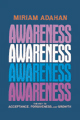 I highly recommend this book, to myself(!) and to others.
In general I hold highly of the writings of Miriam Adahan- the reason for that I can't go into it fully here. But very basically; kind of like the book actually says- you can't serve G-d if you don't even know who you are. That's why we have to know a certain amount of psychology. But alone, psychology is very devoid of G-dly-ness. It's hard to know how it affects you in an 'ethical' way . And that's why a legitimate religious-Jewish approach towards psychology, which not only integrates the ideas of mussar into it, but is only used as a tool to fully understand mussar (especially in the 'innovative' way it was understood in Lithuania and beyond) is necessary. This is one of those books.
As for a description, uhh, well, this is what the Feldheim site says "An in-depth analysis of the nine principle personality types, based on an amazingly accurate, ancient classification system called the Enneagram. The author demonstrates how an understanding of one's strengths and weaknesses can lead to spiritual growth".
Want to buy it?(!)
ממני העבד-
Subscribe to:
Posts (Atom)